The Dance between Ease and Discomfort

I wrote the following during an artist residency sponsored by the Kentucky Foundation for Women and the Sisters of Loretto. Mandy Olivam and I were co-residents.

This morning when I chose to get out of bed before the sun was up, the play between ease and discomfort was alive in me. I began my day with the intention of ease, knowing that some of the work/play ahead would be uncomfortable, would stretch me and perhaps leave me with more questions than answers.

When my dear friend and artist residency companion Mandy and I began our work today, it was with a spirit of openness and play. We read passages from numerous books- by adrienne maree brown, Dominique Drakeford, Bell Hooks, Clarissa Pinkola Estes, and others - and responded to them in writing. Then we shared our writing with each other.

Even with a trusted friend, sharing preliminary thoughts quickly put to paper  felt vulnerable, most certainly uncomfortable. Still after doing this process a few times, each of us had written something we’ll return to & perhaps edit, merge, and ultimately share beyond our duo.

There is much healing work around white body supremacy, patriarchy, and capitalism that is calling us, not just the two of us, but so many of us, to move into the discomfort of the unknown-

When do I step forward and when do I step back?

When do I use my own voice & when do I amplify other voices?

What is my particular role in the healing process?

Entering the discomfort may lead to messing up and causing unintentional harm. We must train our bodies to know the difference between discomfort & danger. Stepping into the discomfort, we build resilience.

Allowing ourselves ease, play, and rest are also part of the work.

And so we ask unanswerable questions, we grapple, we laugh, we play, we hold in front of us a vision of the world we wish to live in, and we practice our way toward it, dancing between ease and discomfort.


P.S. Want to see how Discomfort was made? Check out the video below.

Time lapse video of the creation of a watercolor with the word “discomfort” written on it.

Declaration of Interdependence

I originally wrote this piece for JustFaith Ministries in 2018. Find the original post here.

Just as a body, though one, has many parts, but all its many parts form one body, so it is with Christ. For we were all baptized by one Spirit so as to form one body—whether Jews or Gentiles, slave or free—and we were all given the one Spirit to drink. Even so the body is not made up of one part but of many. – 1 Corinthians 12:12-14

Around the time of Independence Day each year, I can’t help but lament the fact that many people in my country, the United States of America, have taken the idea of independence to a great extreme. Many in this country have lost, forgotten, or actively deny our interdependence, locally, nationally, globally.

Now if the foot should say, “Because I am not a hand, I do not belong to the body,” it would not for that reason stop being part of the body. And if the ear should say, “Because I am not an eye, I do not belong to the body,” it would not for that reason stop being part of the body. If the whole body were an eye, where would the sense of hearing be? If the whole body were an ear, where would the sense of smell be? But in fact God has placed the parts in the body, every one of them, just as [God] wanted them to be. If they were all one part, where would the body be? As it is, there are many parts, but one body. – 1 Corinthians 12:15-20

Both when our lens zooms in and pans out, one thing remains consistent-we are in this together- whether we were born in the U.S. or outside of it, whether we are in the U.S. or outside of it, whether we are Christian, Jewish, Muslim, Sikh, atheist, or of another belief system, whether we are human, other creature, plant, stone.  We’re all in this together. Each of us belongs. Each of us has something to contribute so that our national body and our global body function well. “If [we] all were [the same], where would the body be?”

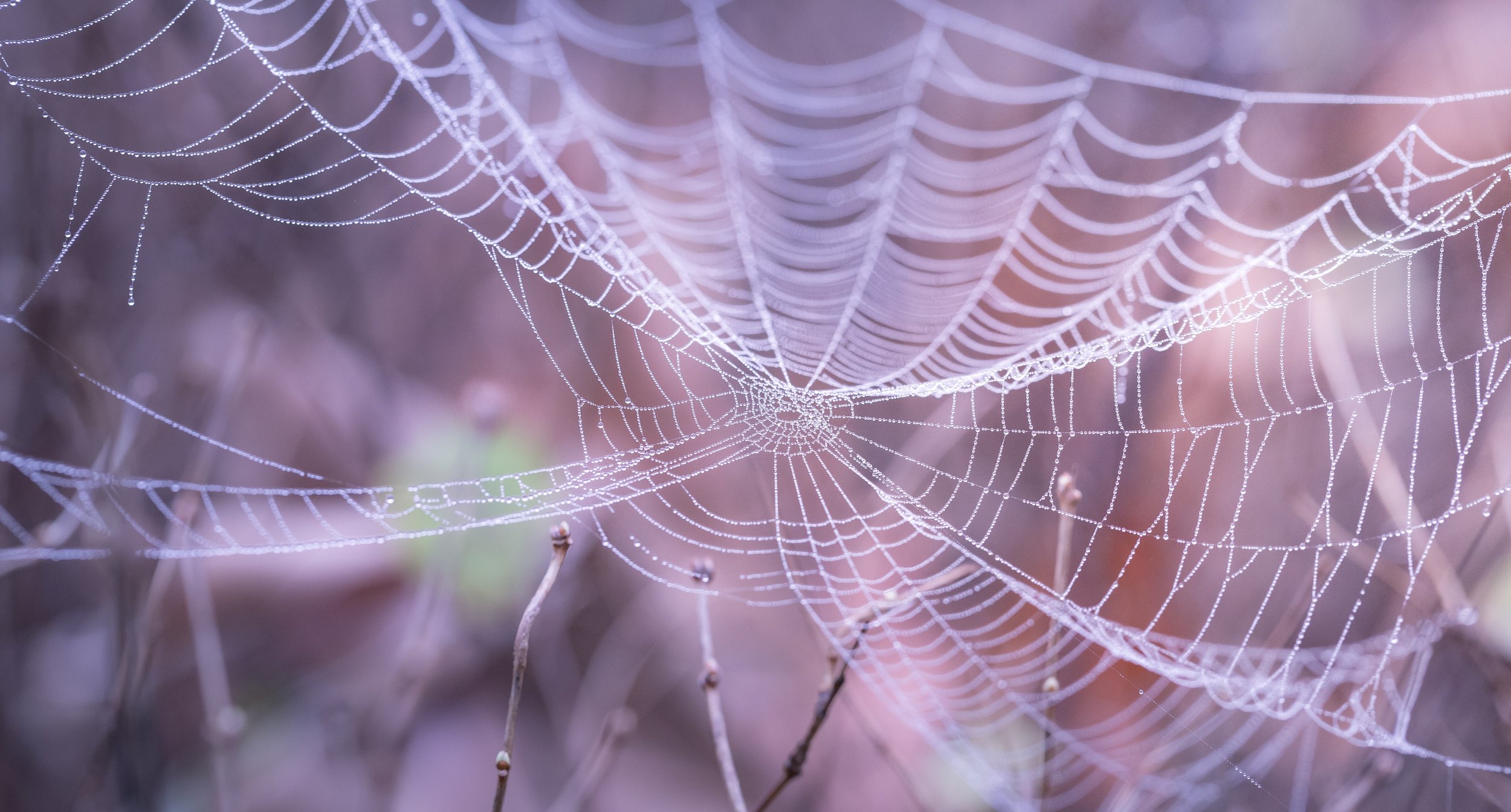
Last week I worked at a children’s day camp. My job was to share community- and peace-building activities. On the first day, we built a web of connection together. We sat in a circle and I began the process: with a ball of string in my hand, I said my name and something cool about myself (“I can sing!”). I invited anyone who shared that trait to raise their hands. Then, holding onto the string, I rolled the string ball to a child who then introduced herself (“I like ice cream!”), more hands raised, and more string ball-passing. After everyone had introduced themselves, we had a beautiful web of connection. I asked one child to pull on the string and anyone who felt their own string getting tighter to raise their hands.  Almost always, more than the 2 children directly connected to the puller raised their hands.  After illustrating this phenomenon a few times, I asked all the children to pull on the string at once.  It broke, sometimes in several places. We talked about how we are all connected, even if we don’t readily see the connections, about how the stress of one person affects many people, and about how multiple points of tension (or one really fierce point of tension) can break connections. I urged the kids to take care of each other during their camp week, to be gentle with each other so as to avoid broken connections. Throughout the week, we played cooperative games and I introduced them to elements of nonviolent communication.

The eye cannot say to the hand, “I don’t need you!” And the head cannot say to the feet, “I don’t need you!” On the contrary, those parts of the body that seem to be weaker are indispensable, and the parts that we think are less honorable we treat with special honor. And the parts that are unpresentable are treated with special modesty, while our presentable parts need no special treatment. – 1 Corinthians 12:21-24

Perhaps we adults would benefit from playing cooperative games. Perhaps we adults should create a visual and tactile web to remind ourselves that we are in this together, we need each other, and that those who “seem to be weaker are indispensable, and [those] that we think are less honorable we treat with special honor.” So many of us seem awfully eager to distance ourselves from this person or that one, this group or another, as we try to distance ourselves, tension in the web increases. We blame some people who “seem to be weaker” for their weakness and deny them the care they need, forgetting that they are “indispensable.” We shut down conversations because we know we are right and “they” are wrong (we are honorable and they are less honorable). The more we pull away, denying our interdependence and our need for each other, the more tension we create. We’ve already broken our web in many places—separating undocumented children from their parents being only the most recent and obvious example. Police shootings of unarmed persons of color. Mass school shootings. Removing some environmental protections. Members of Congress using strongarm tactics, rather than compromise that honors the needs of all. Limiting our friendships to those we agree with.

But God has put the body together, giving greater honor to the parts that lacked it, so that there should be no division in the body, but that its parts should have equal concern for each other. If one part suffers, every part suffers with it; if one part is honored, every part rejoices with it. – 1 Corinthians 12:24-26

How can we honor the places that seem to lack it? How can we find unity in our diversity, allowing all to play our unique and important roles? How can we reduce our own and others’ suffering? What can we honor in each other and rejoice in our interdependence?

Entering Mystery Through Imagination, Trinity Sunday Reflection

This morning, Trinity Sunday, I had the honor of sharing my reflections with my church community. It is ever humbling to have the task of offering my limited understanding. Still I offer what I can and hope that it will invite you into reflection, whether your understanding is similar or different from mine.

Hildegard' of Bingen’s Trinity: a blue masculinr figure in the center with gold and then yellow rings around him. The image is squared off and blue is in the space between the central circles and flowery border. Hildegard didn’t make it into the homily, so I offer this image.

Proverbs 8:22-31, Romans 5:1-5, John 16:12-15


I was walking with my neighbor a few days ago and she pointed out a slime mold. My neighbor is an environmental educator and I learn something new from her every time we walk together. On this particular walk she told me how slime molds are single-celled organisms, often too small for us to see, but when food is scarce, these little beings come together to find food to ensure their survival. Presumably the big blob we were looking at was one such coalition. I think I said something like “Community organizing, single-cell style.” And then I starting thinking about how slime molds might fit into a Trinity Sunday homily. I’ll come back to that in a bit.

Preparing for today I learned a few things about Trinity Sunday, like that in the 4th century, an Alexandrian priest named Arius started spreading the word that Christ was not fully divine. In order to counter what was called the Arian Heresy and reaffirm the trinitarian doctrine of God as three equal persons, and Christ as fully divine, the bishops created a mass dedicated to the trinitarian doctrine, though there wasn’t any set time in the liturgical calendar for the celebration. It was centuries later that Trinity Sunday was set permanently as the Sunday after Pentecost. Apparently, that Sunday was “vacant.” Because many ordinations happened on the Saturday after Pentecost, Church official decided to address the “vacancy” during such an important time by setting this Sunday as Trinity Sunday.

Trinity: the mystery of the three persons/beings/elements of the divine that are at once distinct and all one. I will never fully understand the Trinity, I’m certainly not going to try to explain it today. Instead, I invite us to open our imagination to new ways of understanding our Triune God and consider how this belief might inform our human actions.  

In our first reading from Proverbs, Wisdom Sophia speaks of her relationship with God Creator, Mother who gave birth to her. We see the interrelation between two persons of the Trinity. Wisdom claims her place as the first child of a birthing Mother God, before Creation took physical form. Wisdom, Sophia, Spirit played like a child, was Mother God’s delight and she delighted in humankind. I think she still does. My heart swells with gratitude when I remember three years ago when Wisdom responded to St. William’s communal invitation to play by delighting us with the miracle on 13th Street, relieving us of the burden of a priest and deacon who would not have honored the charism of our community.

In the second reading and the gospel we see the play between the three persons, unitive, working through, with, and in one another, but let’s take a little time with the one most often called the Son. Through Jesus, we experience the divine incarnate, but this second person of the Trinity does not begin and end with Jesus. Richard Rohr writes “The first and cosmic incarnation of the Eternal Christ, the perfect co-inherence of matter and Spirit (Ephesians 1:3-11), happened at the Big Bang 13.8 billion years ago. Christians believe that Jesus of Nazareth was the human incarnation of that same Mystery a mere 2,000 years ago, when we were perhaps ready for this revelation.” He goes on to say, “This Christ is much bigger and older than either Jesus of Nazareth or the Christian religion, because the Christ is whenever the material and the divine co-exist—which is always and everywhere.” Christ is more than Jesus of Nazareth. Our Trinitarian God exists always and everywhere.   

Fundamentally, the Trinity offers us a model of interrelationship, interbeing, community, three as one, a model of stability. The names of the persons often describe both the relationship of one member to another as well as God’s relationship to us. In many Catholic churches the identities of the three persons of the Trinity are only ever referred to as the Father, Son, and Holy Spirit. While labels can help us understand, they also limit understanding. When we’re talking about mystery, why limit ourselves? As we make the sign of the cross at St. William in silence, we allow ourselves to name the Trinity in the way that best reflects our current understanding. Perhaps many of us think the words “Creator, Redeemer, Spirit Sanctifier” as we sign. Let me offer a few other names that might expand our imagination, too.

I wonder if we might use Paul’s words of perseverance, character, and hope as a way of understanding our triune God. I have a ring on my finger with three words: strength, courage, wisdom. Might these words help us understand the three aspects of the Trinity?

Doctor of the church St. Catherine of Siena experimented with many different names for the Trinitarian persons. According to Mary George-Whittle, some of Catherine’s descriptions include “remembering, understanding and desiring; power, wisdom and tender clemency [mercy]; O eternal Truth, O eternal Fire, O Eternal Wisdom.” We might also look to Julian of Norwich who named the Trinity in multiple ways, one being “God the Father, Jesus our Mother, and our good Lord the Holy Spirit.” Or what if we used these words: Creator, Liberator, Advocate or Source, Being, and Return to Being.

How might we understand our relational God if we choose no words, but instead simply allow images? Or textures? Or smells? Imagining into the mystery of the Trinity helps us to stay in creative relationship with the divine. As God is relationship, so God calls us to be in relationship, creating, loving, and delighting through and with one another.

And this brings me back to the slime molds. Like those single-celled slime molds, we often act as individuals, trying to survive on our own. We live in times of disconnection, sharp judgment, solid barriers between people or groups of people. Even though our God offers a model of intimate connection, shared empowerment, and permeable boundaries, we isolate, we compete, we cut ourselves off from one another and sometimes even from ourselves. Slime molds seemed to have learned a lesson from our God as coalition, God as community.

We humans sometimes get it right, too, when we come together on Sundays, when we serve our most vulnerable neighbors, when we stand up and speak out for justice, when we believe there is enough for all and act accordingly. Other times, when we most need each other, and I would argue that now is one of those times, we turn away from one another, believing the only way for our singular, or perhaps our particular group’s, survival is through competition, survival of the fittest, guarding what is “ours” rather than leaning into abundance, relationship, and cooperation.

Our God is ever-transforming through relationship. Slime molds, in their single-celled intelligence, seem to have gotten that message, too: “Hey, stick together. You need each other to live.” May we expansively, creatively, and delightedly do the same.